 More than just blocks: the secret of kid play (The “Just Playing” Myth)
By Kelly McCready
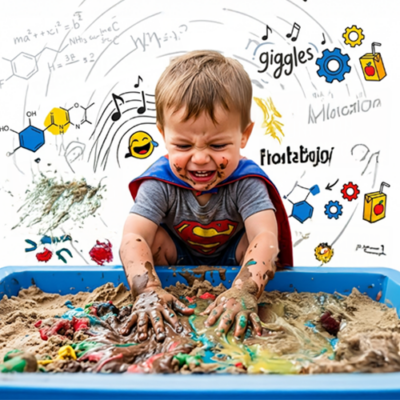
We hear from parents sometimes: “The kids are playing and they’re happy, but are they learning anything?” I get it. When you peek through a classroom window and you see a four-year-old elbow-deep in a bin full of goo, or wearing a cape and negotiating with a make-believe dragon—having a conversation that’s very alive to him or her—it doesn’t look like a traditional classroom. But these are little scientists in action.
I can tell you that what they’re doing is discovering. The secret here is that play is the most serious work that child will ever do. They are learning, expanding, discovering, and experiencing—all at the same time.
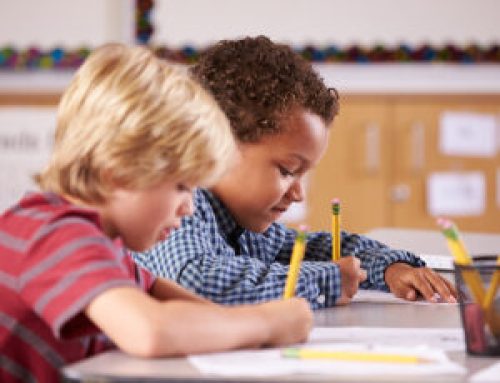
We don’t believe in just sitting at desks and teaching kids how to write letters as the only way of building foundations. Although we do some of that, what we do here is help the kids discover, learn, and communicate under the guise of “just playing.”
The sandbox equals civil engineering 101.
When a kid is trying to figure out why a sandcastle keeps collapsing, why things get dirty, or why things keep getting sand all over them—why he ends up with sand in his shoes that’s either really annoying or he thinks it’s funny—they’re testing the laws of physics: volume, weight, and structure.
They’re learning that adding just the right amount of this or just the right amount of that creates surface tension—ideas and things that they don’t even know that they don’t even know. They aren’t just making a mess; they’re practicing very high-level problem-solving.
Dramatic play is executive function, really.
When a group of toddlers gets together and plays “classroom,” “doctor,” or “grocery store”—when they serve up pretend pizza to their make-believe patrons and collect leaves as money—they are practicing not only communication, but kindness, patience, and negotiation.
They’re learning how to regulate in their own real world. They are practicing empathy and, by design, they are developing executive function, laying down complex rules that they make up for themselves. It’s pretty crazy when you think about it.
The “Un-Report Card” Wins.
In our centers, we believe that the “Un-Report Card” wins. We celebrate when kids discover—when they ask us about things that take us off guard, like “What holds the tree up?” We just smile and try to figure out an answer that makes sense to them.
At the end of the day, real life wins when the kids choose to wait their turn without a meltdown, or when they notice a friend is sad and they bring them a comforting toy or just give them a hug. When they’re trying to stack blocks in a different way after they fell the first time? That’s critical thinking.
The Bottom Line
We don’t teach to the test. We prioritize the foundations of emotional health, curiosity, and creativity. The ABCs and 123s will follow naturally. When you teach a kid how to think, not what to think, everything else falls into line.
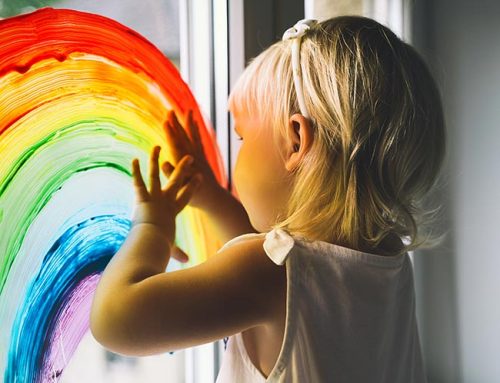
So, when you see your little one covered in paint or “wasting time” in the mud, take a breath. They’re busy being brilliant and building an amazing brain. We’ll just handle the industrial cleanup afterwards. You just enjoy the stories they tell you on the ride home.
#PlayBasedLearning #TheSecretOfPlay #UnReportCard #ValleyLearningCenters #EarlyFoundations #LittleScientists #ChildDevelopment #PhoenixParents #LearningThroughPlay #MotherHens